
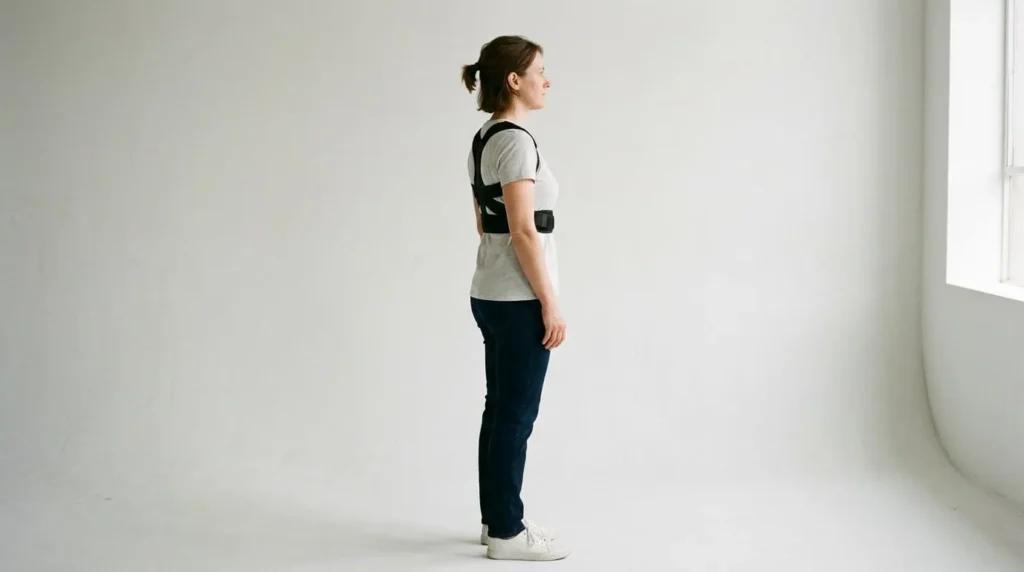

If you have started shopping for the best posture correctors, you have probably noticed there is no single winning product. There are figure-8 braces, full back harnesses, smart vibrating trainers, and shirts that claim to do the job just by wearing them. Each one works on a different problem, and picking the wrong type is the main reason people give up on a posture corrector after a week.
This guide breaks down the real differences between posture corrector types, how to match one to your specific slouch, and how to use it without creating a dependency on the device instead of your own muscles.
What a Posture Corrector Actually Does
A posture corrector does not strengthen your back. It applies gentle, constant pressure that pulls your shoulders back and reminds your body what an upright position feels like. Some do this mechanically, through straps and pressure points. Others do it electronically, through a small device that vibrates when you slouch.
Either way, the corrector is a cue, not a cure. The muscles between your shoulder blades and along your upper back still need to get stronger on their own for the improvement to hold once you take the device off. Think of a posture corrector as training wheels, not a permanent replacement for muscle control.
Types of Posture Correctors and Which Fits Your Situation
1: Figure-8 Back Braces
This is the most common style and the one most people picture when they hear “posture corrector.” Two loops go over the shoulders and cross in an X or figure-8 shape across the upper back, gently pulling the shoulders back and down.
These work best for people whose main issue is rounded shoulders from sitting at a desk or looking down at a phone. They are lightweight, cheap, and easy to hide under a jacket, but they only address the upper back and do nothing for the lower spine.
2: Full Back Support Braces
These wrap around the entire torso and include a lumbar panel in addition to shoulder straps. They give more overall support and are often recommended for people recovering from a back injury or dealing with both upper and lower back fatigue.
The tradeoff is bulk. Full back braces are harder to wear discreetly under clothing and are usually better suited to home use, physical therapy sessions, or short stretches at a desk rather than an entire workday out in public.
3: Smart Wearable Posture Trainers
These small clip-on devices attach to your upper back or collarbone and use a sensor to detect when you slouch. Instead of physically pulling you upright, they buzz as a reminder so you correct your own position.
This category is the best fit for people who want to retrain a habit rather than rely on external pressure. It takes more self-discipline since the device will not force you into position, but the muscle memory tends to last longer once you stop using it.
4: Posture-Correcting Bras and Shirts
Built with reinforced panels and elastic bands sewn into the fabric, these look like ordinary clothing but apply light resistance across the shoulders and upper back. They are the most discreet option and the easiest to wear all day without anyone noticing.
The support is milder than a dedicated brace, so this style works best for mild slouching or as a maintenance tool once a stronger corrector has already helped you build the habit.
5: Kinesiology Tape
Applied directly to the skin in specific patterns, kinesiology tape gives a subtle pull on the shoulders and provides sensory feedback whenever you start to round forward. It is the least restrictive option and stays on through showers and workouts for several days at a time.
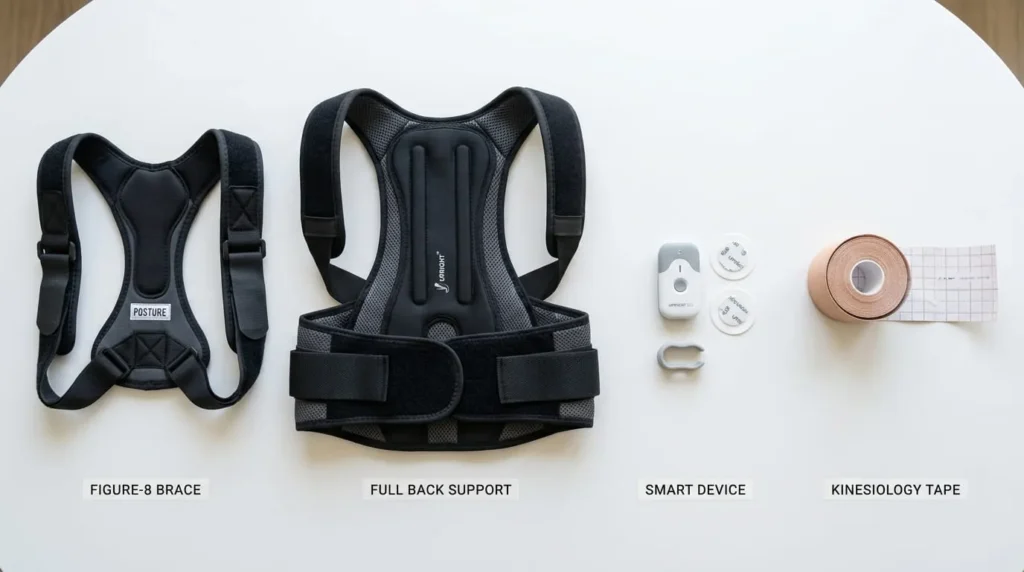
Taping requires some technique to apply correctly, and it will not offer real structural support for anyone dealing with significant back pain or an existing spinal condition.
How to Choose the Best Posture Corrector for You
1: Match It to Where You Slouch
Notice where the problem actually starts. If your shoulders round forward but your lower back feels fine, a figure-8 brace or a posture shirt will do the job. If you feel tightness or fatigue lower down, look for a corrector with a lumbar panel instead of one focused only on the shoulders.
2: Consider How Long You Will Wear It
A device you plan to wear for eight hours at a desk needs to be breathable and comfortable enough that you forget it is there. A device you only wear for a 20-minute focused session, such as a full back brace, can trade some comfort for stronger support.
3: Material and Discretion
Neoprene and breathable mesh are the most common materials. Neoprene holds its shape and gives firmer support but traps more heat. Mesh breathes better and suits warmer climates or anyone prone to sweating, though it usually offers slightly less pull.
If you need to wear the corrector at work, check whether it sits low enough to stay hidden under a button-up shirt. Bulkier full back braces rarely disappear under clothing the way a slim figure-8 style does.
4: Adjustability and Sizing
A corrector that does not fit your frame will either dig into your armpits or slide around and stop doing anything useful. Look for adjustable straps rather than a fixed size, and check the sizing chart against your chest measurement rather than guessing from your regular clothing size.
How to Use a Posture Corrector Safely
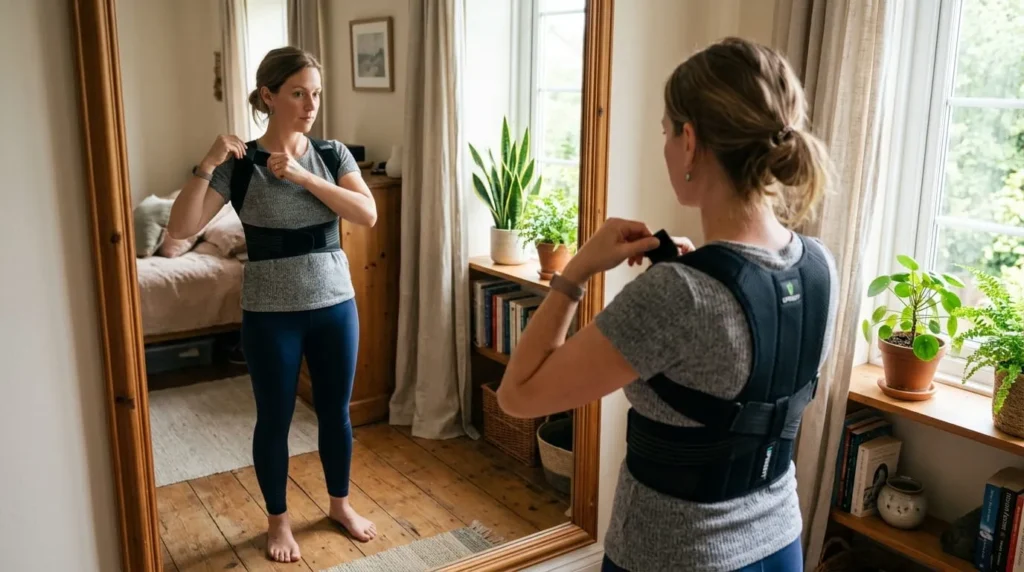
Start with short sessions of 15 to 20 minutes and build up gradually over several weeks. Wearing a brace for eight hours on day one will not speed up results. It usually just leaves you sore and less likely to wear it again tomorrow.
Pay attention to how your body feels during and after wearing it. Mild muscle fatigue is normal as your back adjusts to a new position. Numbness, tingling, sharp pain, or skin irritation is not, and it means the fit needs adjusting or the device needs to come off.
Most people get the best results wearing a corrector during specific high-slouch periods, such as long stretches at a computer, rather than all day, every day.
Common Mistakes That Undo the Benefit
Wearing a posture corrector for too many hours too soon is the most frequent mistake, and it can actually weaken the muscles it is meant to support by letting them relax instead of engaging. The device pulls you into position instead of your muscles doing the work.
Another common error is buying a brace based only on price or appearance without checking whether it targets the right part of the back. A shoulder-focused brace will not help someone whose main issue is a slouched lower spine.
Skipping any kind of strength work is the third mistake. A posture corrector paired with zero exercise tends to produce results that disappear within days of stopping use.
When a Posture Corrector Is Not Enough
If poor posture comes with ongoing pain, numbness, or a visible curve in the spine, a posture corrector alone will not resolve it. These symptoms deserve an evaluation from a doctor or physical therapist, who can rule out conditions like scoliosis or a herniated disc before recommending a device.
Posture correctors are a helpful supporting tool for everyday slouching linked to desk work or phone use. They are not a treatment for a diagnosed spinal or muscular condition.
Posture Correctors vs Exercise: What Actually Works Long-Term
A posture corrector changes how your body feels in the moment. Targeted exercise changes how your body holds itself once the device comes off. Rows, face pulls, wall angels, and chin tucks strengthen the exact muscles between the shoulder blades that a slouched posture lets go weak.
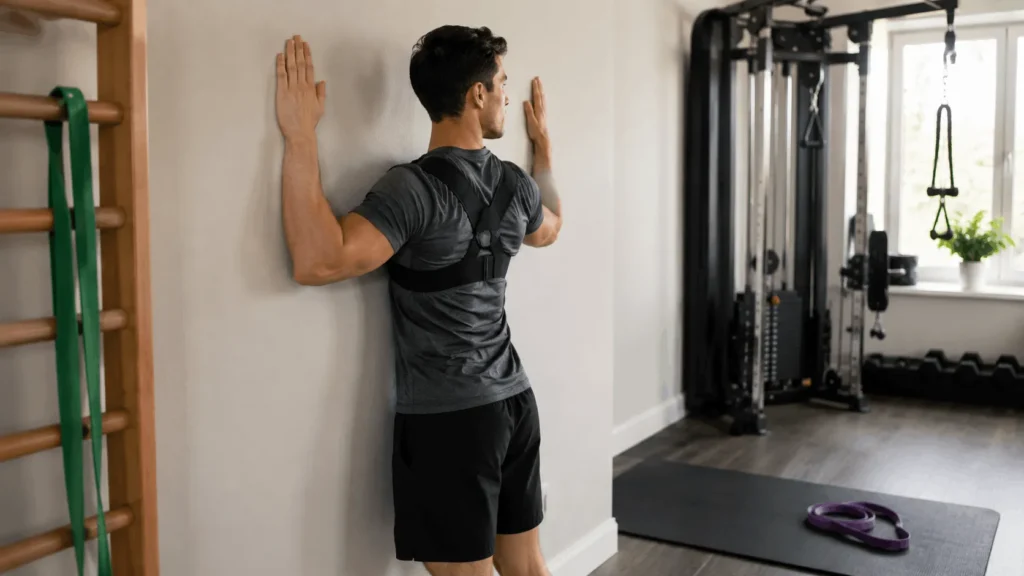
The most effective approach combines both. Wear a corrector during your worst posture hours while building strength through short daily exercises, then gradually reduce reliance on the device as your muscles take over the job on their own.